The Ploemies & Friends: Exploring Cape Jazz, Improvisation, and Global Collaborations
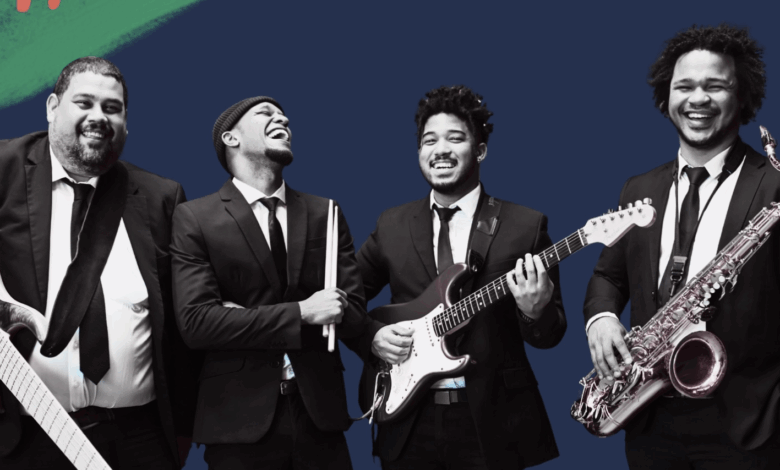
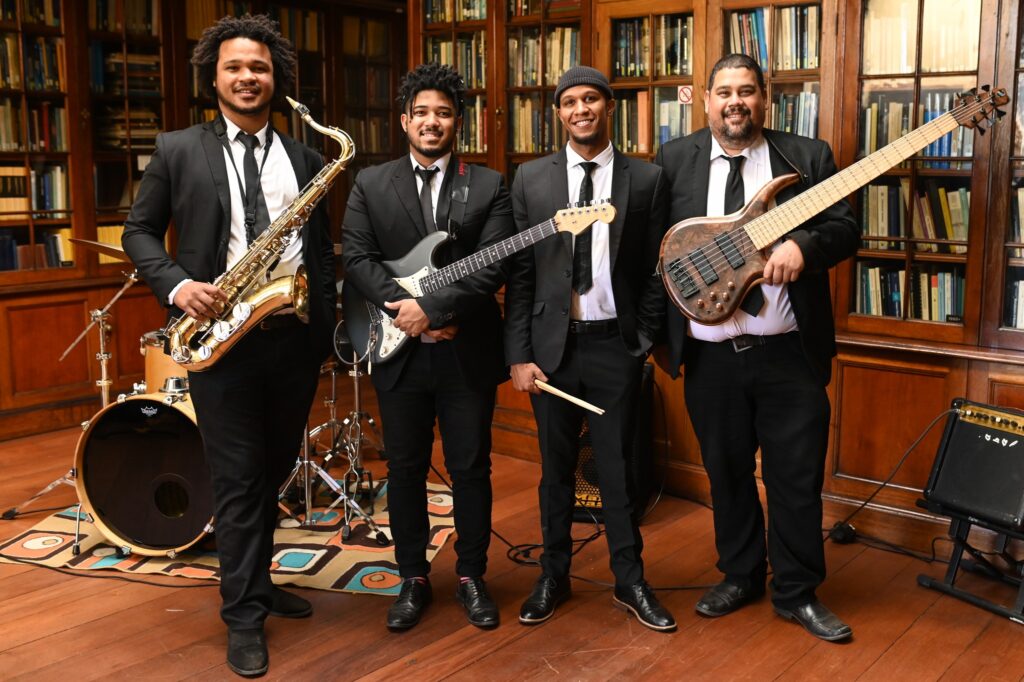
In this in-depth conversation with The Ploemies, we explore the rich tapestry of Cape Jazz and experimental sounds, and how this dynamic group fuses jazz, rock, mbaqanga, samba, and ghoema into a cohesive musical identity. From their beginnings in Cape Town to headline performances at festivals like Montreux Jazz Festival Franschhoek, the band shares insights into their creative process, the role of improvisation, and the unique energy that drives their live shows. We also dive into their “& Friends” collaborations, the joy of mentoring younger musicians, and the ways they are expanding Cape Jazz globally while staying true to its roots.
The Ploemies, your music is known for blending jazz, rock, and experimental sounds—how do you approach creating a cohesive musical identity amidst such diversity?
The ‘golden thread’ in our performances and compositions is derived from core experiences as musicians from Cape Town who play Cape Jazz and its subgenres. The ‘slapdruk’ that is inherent in the way we play genres like mbaqanga, samba and ghoema is particular to the music we grew up listening to and watching in our musical heroes.
The “& Friends” concept brings in guest musicians—how do these collaborations influence the dynamic and direction of your performances?
The reason Duncan Johnson started ‘The Ploemies’ was to uncover, expose and celebrate lesser-known and/or completely unknown composers and musicians who capture our Cape Jazz stories and songs. The addition of Ramon Alexander and Muneeb Hermans in our ‘Cape Jazz Jol’ at the Makhanda Youth Jazz Festival in 2024 was our first foray into collaborations. That production was the biggest thing at the festival and helped to increase our global notoriety. So, when I was approached to put on ‘The Ploemies’ at MJFSA, it was a no-brainer for me to include younger voices as instrumentalists and composers alongside us. The synergy was easy because the ‘& friends’ have literally been exactly that to all of us in the group. As the oldest member, I have directly taught all of them at some point in their lives!
Improvisation seems central to your work—can you describe your process for structuring improvisational freedom while maintaining a strong ensemble sound?
The improvisational approach is firstly to honour and reference the voice of the Cape Jazz musicians, compositions and stories who have come before us. Traditional American Jazz improvisation riffs/licks, bebop language and so forth has been a cornerstone of our musical development individually and collectively. Solos are always interactive even if you’re not playing a single note. We are always present during the improvisation as a collective. We honestly are interested in what you have to say or the feeling you want to convey when you solo. It truly is a team effort of collective listening, supporting, interjecting where necessary and being brave enough to venture out musically.
Your live performances are highly energetic and unpredictable—how do you prepare for the spontaneity of each show?
We prepare for the impossible when we rehearse. All our repertoire is arranged to provide structure and keep the heart/narrative of the music intact and at the forefront of our performances. The belief that the person next to you knows where we are and where we are headed, allows us to deviate as far as we feel at any point in time. At our core, we’re all just old kids who constantly want to tease and coax excellence out of each other. Seeing what we get up to varies in every performance particularly as it pertains to who we play for and where we are playing. At a formal corporate event, we may not be as brash as usual but may elect to sneakily mess around with melodies, grooves, etc. to see how far we can push it before somebody notices! At festivals we ‘go for gold’ and try to outplay, outsmart and chase whatever we can within our songs and try to squeeze out as much life, exploration and fun out of every note.
Montreux Jazz Festival Franschhoek brings together global and African artists—what excites you most about performing at this festival?
Exposing our original compositions and Cape Jazz heritage to a global stage is always the most inspiring part of any festival. MJFSA was amazing due to the variety of artists across several stages that we could watch and mingle with backstage. Having access to each other as composers and artists is invaluable in our progression as individuals and as a group.
South Africa has a rich and evolving jazz and experimental music scene—how do you see your music fitting into, or pushing, that landscape?
Our compositions are aimed at venturing into new musical territories and expanding the definition of Cape Jazz. Our writing style unearths our influences and we try to fuse and develop our songs with the developments occurring in the world today. I believe that our honesty and authenticity is what draws people to our music. The fact that we play the crap out of our songs with all our hearts in a live setting also does help us leave an indelible mark on your brain, ears and heart during our live performances.
Can you share a memorable moment from a past live performance where the interplay between the core quartet and guest artists led to something unexpected and magical?
There honestly are too many to mention! The greatest joys we experienced at MJFSA was the re-imagining of Candice Thornton’s more R&B-flavoured songs into Salsa/Funk groove made a huge impact to our performance. Some of the unexpected and magical moments were when we ended in the wrong place or the chorus was cued too late and in either scenario we just rolled with it and smiled at each other! The fact that the audience enjoyed our interplay, honesty and obvious fun was also a great experience for us.
Beyond live performance, do you plan to record collaborative projects with some of your guest musicians, and how does that process differ from performing live?
We are in the process of compiling new music for our second studio album and it will be an album more focused on collaborative works as we have earmarked some people in South Africa and abroad that we would love to make music with. Recording an album is significantly different to performing live. The excitement of performing for an audience and suffering boomy/unclear sound on a stage invert as a pro and a con respectively in a studio environment. The things you might play live that are exciting and/or provocative to an audience might be musically tasteless in a recording session.
Looking ahead, are there new directions, genres, or collaborations you are excited to explore after your Montreux Jazz Festival Franschhoek performance?
We will be delving into widening our music genres to include countries such as Namibia, Mozambique and Zimbabwe to name a few. We enjoy uncovering, playing and exploring music from these countries as it helps us achieve our core aim of showcasing African Jazz/Fusion via a Cape Jazz lens to the rest of the world. I am hoping to draw upon some of my more famous musical family (which I can’t disclose yet!) from Spain, Cuba, USA, Ghana and Congo.
From unforgettable festival moments to behind-the-scenes studio plans, The Ploemies continue to push the boundaries of Cape Jazz, blending tradition with innovation. Their story is one of collaboration, spontaneity, and musical exploration that resonates far beyond South Africa. Whether you’re a jazz enthusiast, a fan of experimental music, or simply curious about the artistry behind global performances, this interview offers a deep look into how passion, creativity, and community shape one of Cape Town’s most exciting ensembles. Stay tuned as The Ploemies continue to redefine African Jazz for the world stage.