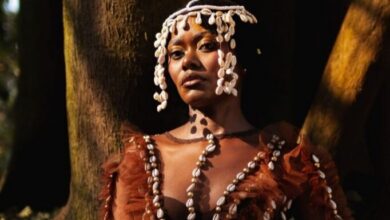
Thando Zide’s Musical Journey Is Rooted In Heritage, Faith And Vulnerability

For Thando Zide, music has never been simply about entertainment or performing for an audience. Her earliest understanding of music came from the home where her father grew up, where intlombe gatherings brought together song, ululation and drumming in deeply spiritual settings. These experiences taught her that music could create an atmosphere that connected the physical world with something greater and more difficult to explain. Her late grandfather and two aunts were traditional healers, and their presence in her childhood helped shape the way she understood the purpose of music. Long before she began building a career as a singer-songwriter, Zide had already learned to view music as a gift that should be approached with gratitude, humility and respect.
Zide has described intlombe as a spiritual gathering among healers rather than simply a social occasion. Within those gatherings, music played an important role in creating an atmosphere that could open what she describes as a connection between the physical and spiritual worlds. This understanding became part of how she processed music from a young age, giving her a relationship with singing that went beyond technical ability or performance. She explains that music is about allowing God room and giving Him reign, a perspective that continues to influence the way she approaches her artistry. Her description of herself as a South African singer-songwriter who followed music until she eventually surrendered to the call reflects the depth of that journey.
Growing up in Soweto also exposed Zide to different cultural influences that would later become an important part of her creative identity. She moved between her mother’s and father’s homes until high school, experiencing both Tswana and Xhosa cultural environments while being raised in a city known for its diverse communities. Zide believes this upbringing gave her a broad creative range and allowed her to move comfortably between different cultural influences. Rather than seeing those experiences as separate parts of her identity, she views them as contributing to the flexibility she brings to her music. That openness has become an important part of the way she creates, allowing her to explore different ideas and emotional spaces without limiting herself to one perspective.
Music was also present in her family in another significant way because her parents met during choir rehearsals. Despite this connection, Zide says her family did not necessarily expect her to become the musician she is today. She was apparently the family member whose lack of interest in music caused some concern, while she chose to study Social Work at university. Her passion for Social Work remains important to her, and she has not presented her studies as a discarded chapter of her life. Instead, she sees the experience as something that helped shape the person and songwriter she eventually became.
The turning point came during her second year at university when the desire to create music became increasingly difficult to ignore. Zide had been making music even while planning to pursue Social Work, but eventually found that pushing the creative calling aside left her feeling incomplete. She realised that making music gave her a sense of wholeness that she could no longer overlook. This led her to confront the possibility that music was not simply a hobby that could remain separate from the rest of her life. Her decision to follow that calling did not erase the influence of Social Work, however, as the patience and curiosity she developed through her studies became useful tools for understanding people and exploring subjects through songwriting.
Those qualities are especially relevant to Ku Ngawe, Zide’s 11-track debut album. The project explores different forms of connection, including romantic, familial, spiritual and communal relationships. While each of these themes has its own place within the album, Zide identifies the familial material as the most difficult to write because of how much of her private life it required her to reveal. She has described herself as someone who enjoys maintaining a private life, which made turning personal experiences into music an uncomfortable process. The album therefore represents not only a collection of songs but also a period in which Zide had to reconsider how much of herself she was willing to share with listeners.
Working with artists such as Msaki, Manana and Ami Faku also contributed to that process of openness. Zide says she had to surrender to the role that connection and vulnerability play in songwriting and allow herself and her collaborators to meet at the level the music required. That meant creating space for honesty rather than trying to control every aspect of how she would be perceived. The collaborative process became part of the album’s exploration of connection, with different voices contributing to a project that deals with personal and shared experiences. For Zide, the result is music that she hopes listeners can make their own by sitting with it, feeling it and allowing it to become part of their own lives.
Ku Ngawe has also changed the way Zide thinks about vulnerability in her songwriting. She previously described herself as someone who tended to write from an aspirational place rather than exposing raw personal experiences. The album challenged that approach by showing her that keeping too much of herself hidden could limit her creative work. At the same time, she maintains that not every part of a person needs to be made public, and she continues to value having certain aspects of her life that belong only to her. Her evolving relationship with vulnerability is therefore not about revealing everything, but about recognising which personal experiences may carry something meaningful for other people.
One of the clearest examples of that shift is Usana, a song featuring Msaki that nearly became too personal for Zide to release. By the time she was creating the song, she had already accepted that the album would allow listeners further into her world than she had previously permitted. The challenge was therefore less about deciding whether the song should exist and more about preparing herself for what would happen once people outside her private world heard it. Releasing the song meant accepting that listeners would gain access to a part of her experience that she had previously protected. That decision reflects the broader emotional movement within Ku Ngawe, where connection requires a willingness to be seen.
Zide’s relationship with her late grandfather also remains closely connected to the meaning she finds in music. When asked what he might recognise if he could hear Ku Ngawe, she points to the yearning she carries with her. That answer connects the album to the spiritual and cultural environment in which she first encountered music. Her grandfather’s home introduced her to gatherings where music carried a purpose beyond entertainment, while her own work now gives that understanding a contemporary artistic form. The connection between her earliest experiences and her present-day songwriting shows how deeply those childhood influences remain part of her creative identity.
Away from the composed presence audiences may see as a performer, Zide describes herself as someone who values quiet and privacy. She says she enjoys a quiet life but also finds many things funny and considers laughter to be deeply healing. That contrast offers another perspective on an artist whose music explores serious themes such as family, spirituality, connection and vulnerability. It also shows that her public identity does not represent every part of who she is away from music. For Zide, maintaining that private space appears to be part of how she protects the freedom to create while remaining grounded in the values that shaped her.
As her career develops, Zide says integrity is one value she does not want to compromise. She acknowledges that she is still learning what integrity means within the music industry and in life more broadly, but she already knows that she wants to protect the principles she has developed. Her preference for working with trustworthy and genuine people reflects the importance she places on authenticity in both her personal and professional relationships. That commitment also fits naturally with the story behind Ku Ngawe, an album that required her to become more open while still deciding which parts of herself should remain private. For an artist whose musical journey began with an understanding of music as something spiritually significant, maintaining that sense of integrity gives her a clear foundation as she continues to grow.
Thando Zide’s journey shows how culture, family, education and spirituality can intersect to shape an artist’s creative identity. From the intlombe gatherings of her childhood to her studies in Social Work and eventually her decision to pursue music, each stage has contributed something to the songwriter she is today. Ku Ngawe represents a significant step in that journey because it allows her to explore connection while becoming more comfortable with vulnerability. Her music carries traces of the world that first taught her that song could create a space for something greater, while also reflecting the experiences she has gathered along the way. As Zide continues developing her voice, her commitment to integrity, connection and gratitude remains central to an artistic journey that began long before she decided to make music her calling.