
Inside Stacey Kent’s World: Jazz, Storytelling, Global Sound & Montreux Jazz Festival Franschhoek
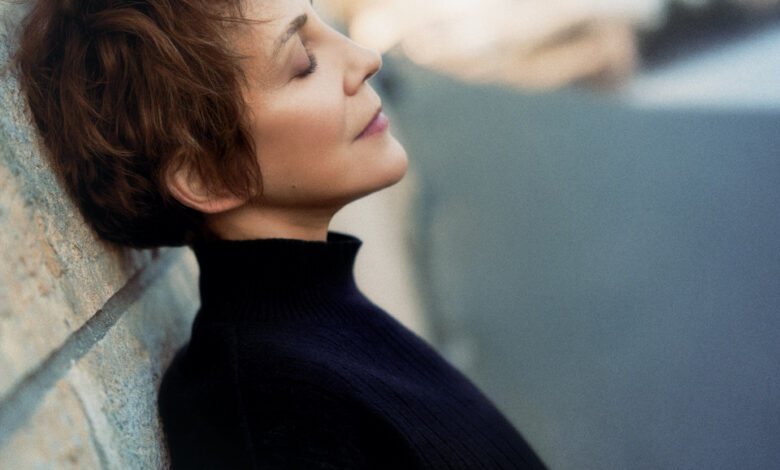
With a career that has gracefully spanned decades, continents, and languages, Stacey Kent remains one of the most distinctive voices in contemporary jazz. Known for her intimate delivery, multilingual repertoire, and deeply emotional storytelling, Kent has built a global following that transcends borders and genres.
Ahead of her performance at the Montreux Jazz Festival Franschhoek, we sat down with the acclaimed vocalist to talk about evolution, collaboration, language, and the quiet power of connection through music.
Q: Stacey, your career has spanned decades and continents—how has your approach to jazz singing evolved over the years?
Stacey Kent: Thank you for this question. You are right—it has evolved over the years. One of the most important shifts, perhaps even a revolution, came through my collaboration with Kazuo Ishiguro and Jim. The songs we’ve written together now form the backbone of my repertoire.
Even when I don’t perform many of them in a particular show, they’ve fundamentally changed how I think about my repertoire and presentation. There’s now a much more direct relationship between the songs I sing, their arrangements, and Jim’s compositions with Ishiguro and other collaborators.
Q: You perform in multiple languages—how does that influence your interpretation and emotional connection to music?
Stacey Kent: I studied foreign languages before becoming a musician, so I’ve always been fascinated by how language shapes expression. Each language—through its grammar, rhythm, and even the physical way we form words—has its own emotional texture, especially when it comes to themes like love.
Singing in different languages has opened up entire worlds of music that would otherwise have been inaccessible to me. While I began with the Great American Songbook, incorporating other cultures and languages has allowed me to present a fuller picture of who I am as an artist and as a person.
Q: Your collaboration with Jim Tomlinson has been central to your sound—how do you balance your voice with his arrangements?
Stacey Kent: Jim isn’t actually a pianist in the traditional sense—he plays what’s called “arranger’s piano”—but he’s a multi-instrumentalist and has produced all of my albums. Our partnership is deeply collaborative.
We’ve been married for 35 years and making music together throughout that time, so naturally, a symbiotic relationship has developed. When Jim arranges music for me, he hears my voice in his head. Everything is tailored specifically for me in a way a generic arrangement never could be.
Q: Your albums range from jazz standards to bossa nova—how do you choose your repertoire for recordings versus live shows?
Stacey Kent: I always start with the lyrics. I see myself as a storytelling singer, so whether it’s an album or a concert, I’m trying to create an emotional journey with a clear arc.
Some songs naturally lend themselves more to the studio or the stage. For live performances, I consider newer material, audience requests, and pieces that help complete the emotional narrative of the set.
Q: Improvisation is key in jazz—how do you approach it vocally?
Stacey Kent: I’m not an improviser in the scat-singing sense. Like Billie Holiday, most of my repertoire is arranged, but each performance is recreated in the moment.
The differences can be subtle or quite dramatic, depending on the musicians, my mood, the acoustics, and—most importantly—the audience. Their energy shapes everything. It’s like telling the same story to different people; the essence remains, but the delivery changes.
Q: You’ll be performing at Montreux Jazz Festival Franschhoek—what excites you most about this?
Stacey Kent: It’s been several years since I last performed in South Africa, and it’s such a beautiful country with wonderful people—how could I not be excited?
The Montreux Jazz Festival is iconic. The last time I performed there, I opened for James Taylor, which was a career highlight. Festivals are always special—they bring together incredible musicians and audiences with a unique energy.
Q: South African audiences have a deep jazz tradition—how do you connect across cultures?
Stacey Kent: I began my career in London in the 1990s when artists like Hugh Masekela were still performing.
What I’ve learned is that the more authentically yourself you are, the more your music resonates across cultures. Music is a universal language—it speaks to shared human experiences: love, fear, joy, community. Those truths connect us all.
Q: Your performances feel very intimate—how do you maintain that in large festival settings?
Stacey Kent: When I was a child, my friends would ask me to sing quietly in their ears—they found it comforting. In a way, that’s still what I try to do.
Even in large venues, with amplification, my goal is to make each person feel as though I’m singing directly to them.
Q: Can you share a memorable moment where an audience deeply influenced you?
Stacey Kent: We once performed a Christmas concert in Paris at the Théâtre Champs-Élysées. I sang a song by Henri Salvador that I had only recently learned, not realizing how iconic it had become in France.
As soon as I started, the entire audience—about 1,500 people—began singing along. It was overwhelming and unforgettable.
Later, someone told me it was “very brave” to perform such a beloved song. But sometimes, being an outsider allows you to approach music with purity, without preconceptions—and that can be a gift.
Q: What’s next for you after this festival?
Stacey Kent: My new album, A Time for Love, is coming out in April, and I’m very excited about it. It’s part of a duo project with pianist Art Hirahara, which began during lockdown with Songs from Other Places.
We’re already exploring new repertoire for future projects. At the same time, Jim and Kazuo Ishiguro are planning new songs for my next album. I’ve also signed a four-album deal with Naïve Records—so there’s a lot to look forward to.
As Stacey Kent prepares to take the stage in Franschhoek, one thing remains clear: her music is less about performance and more about connection. Whether through language, collaboration, or the quiet intimacy of her voice, Kent continues to invite listeners into a shared emotional space—one song, one story, and one moment at a time.